


Lately, I’ve been thinking about what connects us. Connection can feel like this magical spark, this intangible thing we can’t quite put our finger on or replicate. I do this all the time with groups - help the magic of connection emerge - yet when I was trying to come up with some secret sauce, some formula for connection, my theories always fell apart upon closer inspection.
There Are Many Ways To Create Connection
Sometimes, connection can be influenced by the depth of a question asked, while other times, it’s the quality of our listening. Sometimes it’s the dedicated time spent (especially when there are other places to go ), while other times, it seems to spring up instantly. Perhaps it’s a small service or gift given freely, or it could simply be our very presence without needing to say a word.

Connection can be made over a shared language in a foreign country, an inside joke, or liking the same unusual sandwich combination. Sometimes it can be remembering someone’s name or a story they once told you. Other times, it’s hearing what’s not said or understanding them even when they haven’t spoken aloud. Or it can be the shared experience of an observed situation unfolding.
Perhaps, it’s realizing what Maya Angelou said...
We are more alike, my friends, than we are unalike.
Maya Angelou
Author, Poet and Activist
Connection Is Crucial In Every Aspect Of Life
While the exact formula for connection may be impossible to pin down, we can’t deny its importance.
Science has long heralded the importance of oxytocin (often dubbed “the love hormone”) in forming social bonds. But the latest research using Prairie Voles (known for complex social structures, monogamy, and their love of cuddling) shows that even without oxytocin, they’ll still connect, cuddle, and form bonds because connection is so essential to the survival of the species the brain finds a way.
There’s no denying that humans are also social creatures and that forming relationships with one another is just as vital for us.

At work, social bonds are important because they:
- Improve communication and trust.
- Enhance team cohesiveness and collaboration.
- Encourage teamwork and support.
- Increase job satisfaction and motivation.
- Lead to higher levels of creativity and innovation.
- Help manage conflict and resolve differences.
Our suggestion is to find common ground or a shared interest and make that the focus.
One of my friends and old business schoolmates recently got a promotion. I was so thrilled for him that I wanted to reach out and reconnect.

I remembered when he and his family visited my home (a shared experience) after his family had so graciously welcomed me in India. His uncle was one of the warmest, kindest individuals I’ve ever met. And even though there hadn’t been many commonalities between my father and my friend’s uncle, they hit it off instantly with their love of family (shared value) and mutual interest in learning more about different cultures (shared interest). It gave me a great memory to reach out and share with my friend as I congratulated him on his promotion.
What The Research Says About Connection And Team Performance
The research is clear. Connection is not the soft part of team performance. It is the infrastructure underneath it.
Google spent two years studying more than 180 of its own teams in a project called Aristotle. The researchers expected the answer would come down to composition. The right mix of seniority, skill, and experience. They were wrong. The single biggest predictor of team performance was psychological safety. The shared sense that people could speak up, admit mistakes, and challenge ideas without fear.
MIT research on collective intelligence found something similar. A team's ability to perform well on a wide range of tasks was not predicted by the IQ of its members. What mattered was social sensitivity. How well members read one another. Whether conversation was shared or dominated.
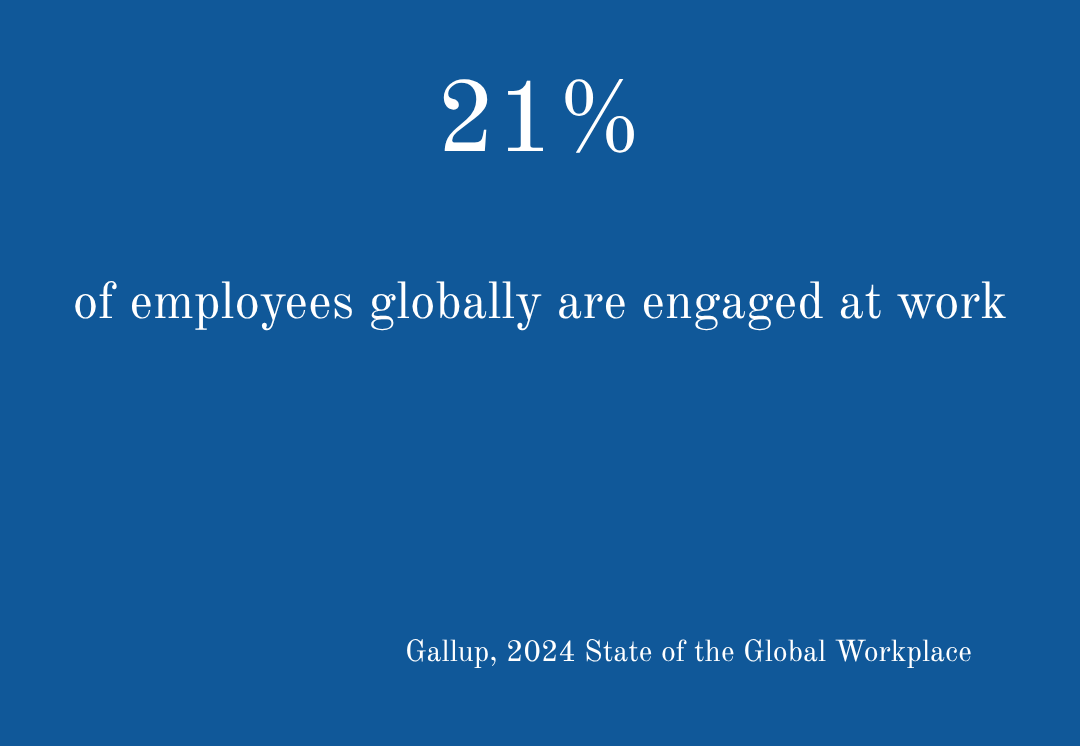
And the business case is not abstract. Gallup's 2024 State of the Global Workplace report found that global employee engagement dropped to 21 percent, costing the global economy $438 billion in lost productivity. Disengaged employees are more than twice as likely to leave.
What ties these findings together is simple. The teams that perform are the teams whose members are genuinely connected to one another. Not in a surface way. In a way that changes how they communicate, how they decide, and how they respond when things go wrong.
Be Deliberate About Connecting
It’s easy to get caught up with the project in front of us or the work at hand and forget to just spend time connecting. It’s important to be deliberate about this and find ways to connect often rather than only doing a one-day off-site once a year; try making time to connect at every meeting. Even a few quick minutes will go a long way.
One of my favorite managers, K, did this beautifully. We met as a leadership team once a week. And even when we had fires to fight (proverbial, of course!), new organizational priorities, and initiatives to introduce, she made time for connection. We invariably met over something to eat or drink, depending on our meeting time. And the first question was how were we, or what was new.

This ten minutes of personal conversation connected us, and it moved us from where we were coming in, strengthened our trust in one another, bonded us as a unit, and helped us be present, open, and curious. This time to connect allowed us to show up with creativity and innovation and contributed to the success of our collaboration.
Managers can help create connections by:
- Fostering open and effective communication.
- Promoting a positive and inclusive team culture.
- Recognizing and valuing strengths and contributions.
- Encouraging team-building and bonding exercises.
- Creating a supportive and collaborative work environment.
- Creating a common mission and vision and communicating it often.
Connection In Hybrid And Remote Teams
The question of how to create connection has changed. Before, it often happened in the hallway, at the coffee machine, in the walk to the parking lot. For many teams, those moments are rarer now. For some, gone entirely.
And the data shows the cost. Gallup's 2024 research found that fully remote workers report 25 percent loneliness, compared to 21 percent for hybrid workers and 16 percent for those on site. In a paradox the Gallup team named directly, fully remote workers also report the highest engagement but the lowest overall thriving. More stress, more loneliness, more sadness. Connection has not gone away as a need. The ways it gets built have simply disappeared from the default.

Young entrepreneur attending a virtual meeting with her team while working remotely from home
I was working with a company going through exactly this kind of shift. A new CEO had decided to bring everyone back to the office. The company had grown through a series of mergers, so some groups sat near one another and had families and after-work plans already woven together. Others lived hours away and spent most Mondays and Fridays traveling. Most of the important meetings happened on Mondays. People had not been read in ahead of time and the ill will was immediate.
What shifted it was not the mandate. It was the conversation about how to make the time together actually worth something. The team moved the big meetings to midweek. They made the in-office days something people wanted to show up for, not just something they were required to do. Connection came back when the days were designed for it, not assumed to produce it.
That is the lesson. Remote and hybrid setups require leaders to be more intentional about connection, not less. The informal moments have to be replaced with designed ones. Not as extras. As the foundation that everything else depends on.
Work Together On A Goal
When we work together on a goal or when we’re recognized or rewarded for a group effort, we are oriented differently - towards the common good. And it’s good for business.
One of the things I often see in the leadership teams I work with is that the teams that are the most connected are passionately aligned around a common mission. They’re clearly united in a goal, around an intention, or in pursuit of a particular vision.

This is most obvious with the non-profits I support. Even a shared remit can create connections across a department, function, or task force.
I experienced this at Microsoft when the company began to track and reward Customer Experience. An inspiring future was envisioned and shared, dedicated resources were put in place, and teams were united in their understanding of the next steps.
This created new connections throughout the organization, particularly across and between functions. Even more importantly, new connections were formed with customers, and these relationships were deepened through surveys, group meetings, focus groups, and site visits. Business and personal connections were forged during these listening tours. And relationships were further deepened when customers saw action in response to what was learned through these connections.

In the workplace, we have common goals, a shared culture/environment, and even overlapping values. The key to connection, if there is one, is to find all the ways in which we are alike and use that as a bridge to one another. That bridge, that shared humanity or shared goal, can then make it so much easier to celebrate and appreciate our differences too.
Strong team connection is not built in a single offsite. It is built through how the team works together week after week. At Lead Bee, we work with executive teams on the dynamics that shape how connection, trust, and performance develop over time.